Tile Connect - Matching Games
- 4.2
- Rating
- 50.00M
- Installs
- Free
- Price
 Analysis by App-foxy
I spent time with Tile Connect - Matching Games as a casual board puzzle, and my first impression was clear: it is designed for short, repeatable sessions rather than one long, story-driven adventure. The basic task is to find matching tiles and clear them, but the appeal comes from how quickly a simple board can turn into a test of attention. It is the sort of game I can open while waiting for an appointment, play for a few minutes, and put down without needing to remember a complicated plot or control scheme.
Higgs Studio presents it as a free game for everyone, and that description fits the experience well. The controls are approachable, the visual idea is easy to understand, and the board-game structure makes it suitable for players who prefer quiet concentration over fast reactions. At the same time, it is not completely frictionless. The repeated matching format can feel familiar very quickly, and the extra monetization options mean that players who dislike in-app purchases should pay attention to how they use the game.
How the matching loop works in everyday play
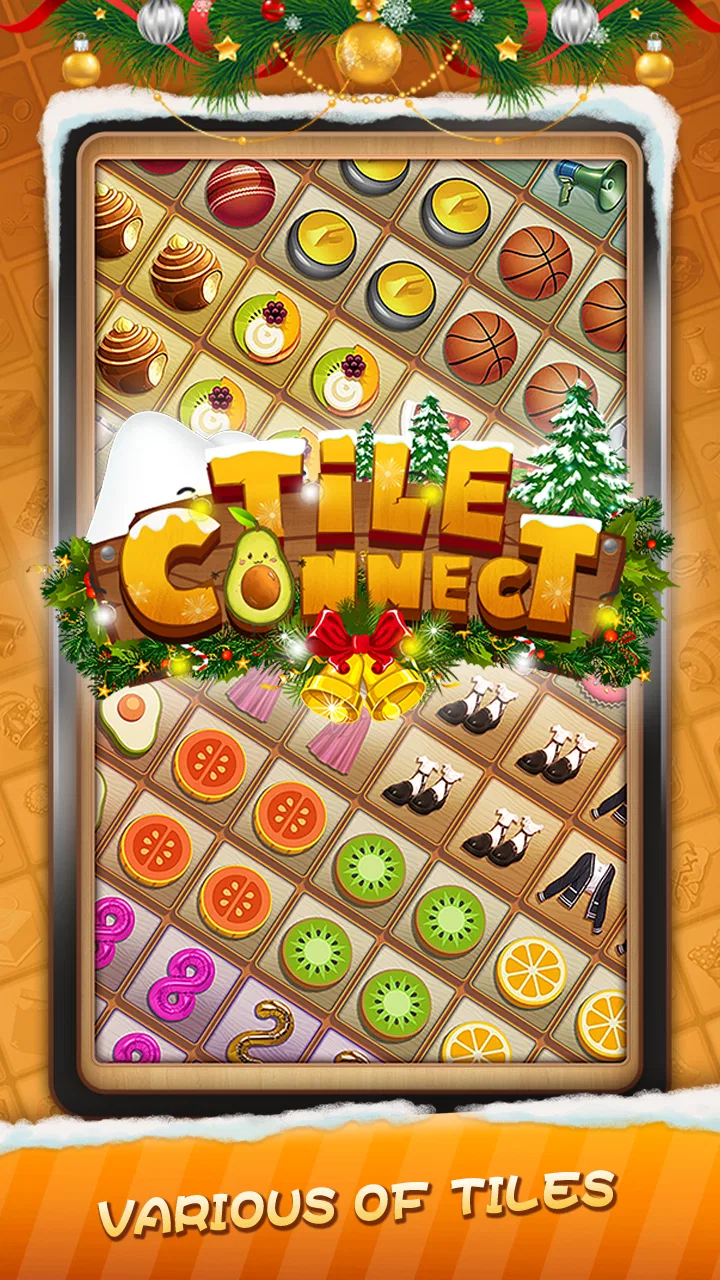
The central loop is straightforward: I look across the board, identify two identical tiles, tap them, and watch them disappear. That simplicity is the strongest part of the design because I do not have to learn a long rulebook before making progress. The challenge is not understanding the objective; it is keeping track of the remaining patterns while the available space and visual clutter change from move to move.
You May Also Like

 AccuWeather: Weather Radar
AccuWeather Review: A Quick, Clear Forecast for Everyday Decisions
For everyday plans, the best forecast is the one you can understand quickly. AccuWeather makes rain timing, radar, and local conditions easy to act on, with a few trade-offs.

 Hill Climb Racing
Why Hill Climb Racing Still Turns Crashes Into One More Run
A tiny car, a bumpy hill and one more upgrade: Hill Climb Racing keeps resurfacing because its simple chaos makes every near-miss feel personal.

 AliExpress - Shopping App
AliExpress Makes Global Shopping Feel Personal, but Shoppers Bear the Risk
AliExpress turns a global marketplace into a pocket-sized discovery engine. Its reach is useful, its shopping loop compelling, and its trade-offs easy to miss.

 Lords Mobile: Kingdom Wars
Lords Mobile Is a Kingdom-Building Routine, Not a Quick Match
A case-by-case verdict on the building, battles, device demands, and social commitments that make Lords Mobile rewarding for some players and exhausting for others.

 PDF Scanner app - TapScanner
TapScanner Makes Paperwork Easier to Capture, Check, and Share
TapScanner makes scanning with a phone feel less like a rescue operation and more like a dependable step in getting work done. Its capture tools are useful, though not flawless.

 Block Blast!
 Shows How Much a Puzzle Game Can Leave Out
A quiet grid game shows why puzzle players increasingly value instant clarity, repeatable skill and low-pressure play—and where the genre still needs to catch up.
More From Our News Desk
View All News


That makes the game different from a traditional board title that depends on planning several turns ahead with fixed pieces. Here, the board is more like a visual search problem. I am constantly deciding whether to take an obvious pair immediately or spend a few seconds scanning for a more useful match. A quick match can open up tiles that were difficult to see, while a careless tap can leave the board in an awkward state.
The tile-crush minigame element gives the package a little more variety than a single static matching exercise. I would not describe it as a completely different game, but it helps break up the rhythm when the main board starts to feel repetitive. The transition between ordinary pair matching and tile-clearing activity is useful during longer sessions because it gives me a small change of pace without forcing me to learn an entirely new control system.
One practical strength is that the game works well with divided attention. I can play it while taking a short break, but it still rewards giving the board my full focus when the layout becomes crowded. That makes it more flexible than many action-oriented mobile games. There is no need for fast swipes or precise timing in the basic matching task, so the experience feels comfortable for players who want a slower puzzle.
The first goals are easy to understand
The early goals are communicated through the board itself. I do not need a separate explanation to know what success looks like: find the pairs and clear the available tiles. That immediate clarity is important on a phone, where a game that takes too long to explain can lose my attention before the first meaningful move.
In the opening stages, the satisfaction comes from seeing the board empty one pair at a time. Each successful match acts as a small confirmation that I am reading the layout correctly. This creates a gentle entry point for new players, including people who may not normally choose puzzle games. The game does not rely on a complicated story or a large cast of characters to make the first few minutes feel purposeful.
I also found that the early boards encourage a useful habit: scan before tapping. It is tempting to remove the first visible pair immediately, but taking a brief look at the whole board can reveal several options. That habit becomes more valuable later, when the best move is not always the most obvious one. For a casual game, this is a good form of early teaching because it emerges naturally from play rather than from a long tutorial.
There is a trade-off, though. Players who want a strong sense of narrative purpose, collection, or character development may find these early goals too thin. The reward is the act of solving the board, not a larger adventure around it. I would recommend it to someone who enjoys small mental tasks; I would skip it for anyone looking for a campaign with a strong story or a deep strategic system.
How progress feels without becoming complicated
Progress in a matching game is felt through increasingly demanding layouts and the ability to complete more boards with fewer mistakes. The most useful signal is visual: when I clear a difficult cluster, the board becomes easier to read, and that change tells me that my decisions mattered. The game does not need an elaborate progression screen to make every small success understandable.
The minigame content also helps the overall rhythm. When a session includes a tile-crushing section, the change gives me a reason to continue for another round instead of stopping immediately after a standard board. This is a modest form of variety, but it matters in a game built around a repeated action. I appreciate that it stays close to the matching theme rather than interrupting the experience with an unrelated activity.
A useful personal workflow is to treat each board as two phases. First, I make the easy matches that reduce the visual noise. Then I slow down and reassess the remaining tiles rather than continuing at the same speed. This is more effective than trying to move quickly from the start. It also makes the game feel less like random tapping and more like a small process of organizing information.
Another practical tip is to avoid assuming that the pair nearest to the center is the best one. A match at the edge may expose several tiles, while a central match may change very little. I found that looking for the move that improves visibility is often more useful than simply choosing the pair that is easiest to recognize. That is a small but meaningful layer of judgment, especially for players who initially see the game as pure memory matching.
The limitation is that this kind of progress can feel subtle. If I want clear milestones, a rich upgrade tree, or a visible long-term build, the game may not provide enough motivation by itself. Its progress signals are mainly tied to solving boards and continuing through the available challenge, so the appeal depends heavily on whether I enjoy the act of matching.
Difficulty rises through attention, not complicated rules
The difficulty curve works best when the board becomes harder to read. The rules remain simple, but the number of possible matches and the arrangement of tiles demand more concentration. This is a sensible way to increase challenge because it preserves accessibility while making careless play less reliable.
My approach changed as the boards became less immediately readable. At first, I could respond to obvious pairs almost automatically. Later, I had to pause, inspect the remaining symbols, and think about which match would reveal the most useful information. That shift creates a natural difficulty curve: the game asks me to improve my scanning and decision-making rather than memorize a new set of mechanics.
The challenge is also affected by pacing. If I play several rounds in a row, the symbols can start to blur together, and my accuracy drops even when the rules have not changed. A short break is surprisingly helpful. I would rather stop after a difficult board and return later than continue while tired and blame the game for mistakes caused by rushing.
This is where the title compares favorably with more reflex-based alternatives. Compared with match-three games, it is less about creating chains or reacting to a changing timer and more about recognizing pairs in a fixed visual field. Compared with classic solitaire-style board games, it offers less card-based planning and more direct visual sorting. Players who like Mahjong-inspired matching may feel at home, although this experience is lighter and more immediately accessible than a deep traditional board simulation.
On the other hand, players seeking complex strategy should keep their expectations realistic. The decisions are meaningful within a board, but they do not build into a broad tactical system. The game is better at creating a focused mental pause than at delivering the kind of long-term strategic depth found in larger board-game adaptations.
Where the pacing helps, and where it can push too hard
The pacing is one of the main reasons I can imagine returning to the game. A completed board gives me a clean stopping point, while the next challenge is close enough to invite one more attempt. That structure suits everyday situations: I can play during a commute break, after finishing a household task, or while waiting for someone without committing to a long session.
A realistic example is a ten-minute wait before an appointment. I can open the game, work through a board, and stop when my name is called. I do not need to coordinate with other players or preserve a complicated position. If I make a mistake, the consequence stays inside that short session, which makes the game feel less demanding than competitive multiplayer titles.
The same pacing can become a weakness when the repeated loop starts to feel like a demand rather than a choice. Free games often use continued play, optional purchases, or interruptions to encourage another round, and this title includes in-app purchases ranging from under a dollar to several hundred dollars per item. That wide range makes it particularly important for me to treat purchases cautiously, especially if the device is shared with children.
The Everyone age rating makes the game broadly approachable, but an age rating does not replace sensible spending controls. I would play it freely as a no-cost puzzle, but I would not assume that every optional purchase is necessary for enjoyment. My recommendation is to decide in advance whether I am using it as a free casual game and stick to that boundary. If a player dislikes any form of purchase pressure, a paid puzzle with no in-app economy may be a better fit.
Another retention issue is repetition. The tile-pair format is satisfying when I am in the mood for it, but it cannot offer the same variety as a broad collection of unrelated puzzles. The tile-crush minigames help, yet they do not completely change the identity of the experience. I would not install this expecting a new type of challenge every few minutes.
Who should install it and who should look elsewhere
I think this game is a good match for people who enjoy visual organization, gentle concentration, and short board-puzzle sessions. It is especially suitable for someone who wants a simple activity that can be learned immediately but still becomes more demanding as the layouts require closer inspection. Older players and casual gamers may appreciate the lack of complicated controls, while experienced puzzle fans can use the boards as a quick mental warm-up.
I would be more cautious about recommending it to players who need a strong story, competitive ranking, deep strategy, or a large sense of discovery. The game’s identity is narrow by design. Its success depends on whether matching pairs and clearing tiles remain satisfying after the novelty fades. If I wanted a richer strategic board experience, I would choose a dedicated board-game adaptation. If I wanted constant action, I would choose a faster puzzle format instead.
Device compatibility is also worth checking before installing. The game requires Android 8.0 or later, so it is not aimed at very old Android devices. On supported hardware, the low-complexity board format should make it an easy game to pick up, but the real question is not performance; it is whether the visual style and repeated matching loop suit my taste.
The game has been available since August 24, 2020, and its scale is reflected in more than fifty million installs, with an average rating of 4.2 from around two hundred ten thousand ratings. Those figures suggest that the format has broad appeal, but they do not change my main advice: popularity is not a substitute for knowing what kind of puzzle you want. I would use the large player base as a sign that the basic loop is accessible, not as proof that it will satisfy every board-game fan.
My progression verdict after weighing the full loop
For me, the progression works when I judge it as a casual matching game rather than as a full board-game system. The early goals are clear, the progress signals come from successfully cleaning up increasingly demanding layouts, and the difficulty grows mainly through visual pressure. The tile-crush minigames give the routine some needed variation, while the short-board structure makes it easy to fit into ordinary spare time.
Its biggest weakness is also obvious: the core action remains familiar. Players who enjoy gradual mastery of a focused mechanic may find that appealing, but anyone who needs constant novelty may run out of enthusiasm. The free entry point is convenient, yet the presence of in-app purchases means I would keep spending firmly under control rather than treating every optional offer as part of the necessary progression.
Higgs Studio’s current version is 1.19.9, and the game remains an easy recommendation for a specific audience: people who want a calm, accessible tile-pair puzzle with occasional tile-crushing variety. I would install it for short breaks, use the scan-before-tapping habit to improve my boards, and stop when the session begins to feel repetitive. The best way to enjoy Tile Connect is to treat it as a focused free puzzle, not as an endless progression obligation.
Overall, I would recommend it to a friend who likes simple board games and wants something immediately playable on a phone. I would also be honest about the boundaries: it will not replace a deep strategy title, and its purchase options deserve attention. Within its intended space, though, it delivers a pleasant cycle of spotting, clearing, reassessing, and trying again. That focused rhythm is enough to make it worthwhile for the right player.
FAQs for Tile Connect - Matching Games
01What is Tile Connect - Matching Games?
Tile Connect - Matching Games is a puzzle game that challenges players to match pairs of tiles within a limited time. The game is designed to test your memory and concentration skills, providing a relaxing yet engaging experience with various levels and themes that keep the gameplay fresh and exciting.
02Is Tile Connect - Matching Games free to play?
Yes, Tile Connect - Matching Games is free to download and play. However, the game includes in-app purchases that allow players to buy hints or remove ads for an enhanced gaming experience. This freemium model enables you to enjoy the core game without any cost, while offering optional purchases.
03What are the system requirements for Tile Connect - Matching Games?
Tile Connect - Matching Games is compatible with both Android and iOS devices. For Android, it generally requires version 5.0 or later, and for iOS, version 10.0 or later. It’s recommended to have a stable internet connection for seamless gameplay and access to online features and updates.
04Does Tile Connect - Matching Games offer multiplayer modes?
Tile Connect - Matching Games primarily focuses on single-player experiences. However, it does feature leaderboards where players can compete for high scores with friends and other players globally. While there isn’t a direct multiplayer mode, the competitive aspect adds a social element to the game.
05How can I contact support for Tile Connect - Matching Games?
If you encounter any issues or have questions about Tile Connect - Matching Games, you can contact the support team through the app. Navigate to the settings or help section, where you'll find contact options such as email or a support form. Responses are typically prompt, ensuring a smooth user experience.
Pros
- Engaging and addictive gameplay.
- Simple and intuitive interface.
- Smooth performance without lag.
- Variety of levels and challenges.
- Suitable for all age groups.
Cons
- Contains frequent ads.
- Limited free hints available.
- Requires internet for some features.
- In-app purchases can be pricey.
- May drain battery quickly.

Tile Connect - Matching Games
Gallery